October 2, 2026 • Five years. Four leases. Three cities. One long-term attorney-client relationship.
Most advisory relationships in commercial real estate get tested on the deal happening right now.
The harder test is whether the relationship holds up over time — as the deals change, the markets change, and the challenges get harder.
Over the past five years, I’ve represented PennantPark Investment Advisers on four leases in three cities, most recently a complex headquarters lease in Miami.
After that transaction, PennantPark Founder and Managing Partner Art Penn shared this about our work together:
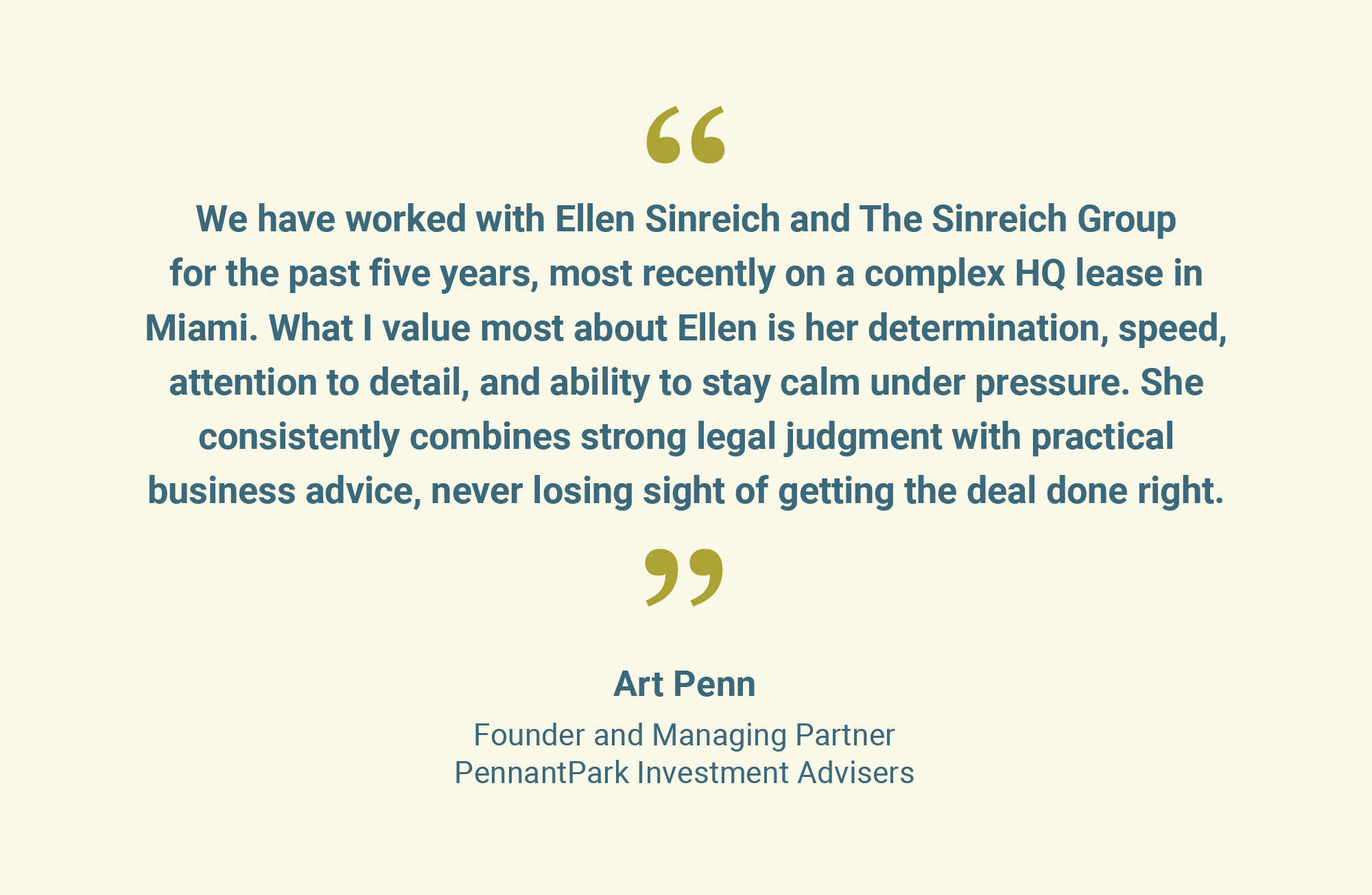
What strikes me most about that isn’t the compliment. It’s the five years.
Five years means working together across different deals, different markets and different pressures. It means knowing a client’s business well enough that they don’t have to start from scratch explaining what matters every time a new transaction begins.
That depth of understanding mattered when we tackled PennantPark’s new headquarters lease in Miami. I already understood their priorities and risk tolerance. I knew what needed to be flagged, which lease provisions required modification, which issues warranted the client’s attention and where there was room to be flexible.
That combination of knowledge, judgment, and trust enabled us to move quickly while minimizing risk. In any lease, moving quickly without the right combination of knowledge, judgment and trust significantly increases exposure.
Leasing velocity — the ability to move a deal from LOI to executed lease quickly and cleanly — has become a real competitive advantage. But speed on its own isn’t the whole story.
Speed without trust is just risk moving faster.
The deals that don’t stall under pressure are often the ones where the people involved already trust each other’s judgment. And that kind of trust doesn’t get built at deal speed. It compounds over years.
Being good on one deal matters.
Being the person a client trusts with the next one — and the one after that — matters even more.
So when a deal is moving too slowly, it’s worth asking why:
Is the friction coming from the deal itself — or from having to rebuild trust with new advisers every time?
And when a deal is moving quickly, there is another question worth asking:
Is that speed grounded in knowledge and judgment — or is it just risk moving faster?